
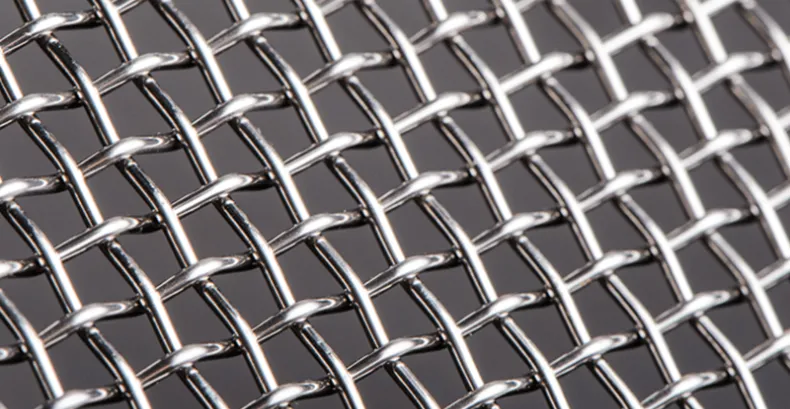







| Material | austenitic stainless steel |
| Standard | ASTM A580 |
| Grade | AISI 321 |
| Main properties and application | Type 321 (T-321) of USA standard AISI is a versatile and widely used steel; steel weldability is good and this grade, as well as stainless steel grades with titanium content, are recommended for use in welded products; steel is weakly magnetic, in the heat-treated state it is practically non-magnetic; steel grade AISI 321 is recommended for long products and hot-rolled sheets not produced on continuous rolling mills; good resistance to atmospheric and intergranular corrosion, combined with heat resistance, stability, strength, ease of processing, the ability to use in a wide temperature range, made this steel grade one of the most produced and used in various industries around the world, including for the manufacture of machine parts and apparatus for food and commercial engineering, consumer goods, etc.; it is possible to smelt steel of this group with a low carbon content. Compared to T-304L, T-321 stainless steel has higher creep strength and tensile strength, and good low-temperature toughness. However, T-304L wire mesh is generally more affordable than T-321 and is often used in most situations, unless the wire mesh is to be used in an operating environment with temperatures above 420°C (since T-321 has better hot strength properties) . If resistance to intergranular corrosion after welding is the only requirement, T-304L alloy is preferred given its greater stock availability. |
| Operating temperature | recommended operating temperature not more than 900°С; melting point 1400°С |
| Grade analogue | EN 1.4541 (Х6 CrNiTi 18-10); Poland (PN): 1H18N9T; GB: BS 321S31; UNS S32100; Japan: SUS321 |
| Density | 7.92 g/cm3 |
| Corrosion resistance | wire, wire clothes and wire screens made of stainless steel AISI 321 has good resistance to atmospheric and intergranular corrosion, including in saturated steam, when working at high and low temperatures and in aggressive environments, in solutions of nitric, acetic, phosphoric acids, solutions of alkalis and salts, in sea water; AISI 321 steel is recommended to be used as corrosion resistant; used in environments with greater aggressiveness, including for welded products; AISI 321 steel grade is unstable in sour environments. |
| Notes regarding corrosion | weather resistance: higher than ordinary carbon steel (St.0-St.3, etc.) uncoated 4500 times higher than galvanized steel 500 times higher than aluminum 50 times higher than brass 25 times. PREN (EPC - Pitting Resistance Equivalent): 20 |
| Carbon (C) | ≤ 0.08 |
| Silicon (Si) | ≤ 1.0 |
| Manganese (Mn) | ≤ 2.0 |
| Chrome (Cr) | 17.0 ÷ 19.0 |
| Nickel (Ni) | 9.0 ÷ 12.0 |
| Titanium (Ti) | ≥ 5*C ÷ 0.7 |
| Iron (Fe) | balance, approx. 70% |
| Sulfur (S) | ≤ 0.03 |
| Phosphorus (P) | ≤ 0.045 |
Stainless steel AISI 321
AISI 321 steel is a representative of the family of corrosion-resistant alloys of the 300 series, which are manufactured according to the standards of the American Iron and Steel Institute (standard adopted in the USA). The alloy is less common than AISI 304, but is also widely used and is in stable demand. Sometimes AISI 321 steel is called “18/10”, due to the composition of its main components.
AISI 321 stainless steel composition
The chemical composition of the alloy determines the performance properties of the material. Like all grades of steel 300 series, corrosion resistance and heat resistance are ensured by the inclusion of the main alloying components in the alloy composition - chromium up to 18% and nickel up to 10%, but the including of an additional component - titanium in an amount of up to 0.7% gives the alloy resistance to intergranular corrosion when operating at high temperatures.
AISI 321 steel: performance characteristics
AISI 321 stainless steel is in demand in many industries due to its excellent corrosion resistance (including intergranular corrosion) in almost all generally available environments and temperature conditions. Intracrystalline corrosion - when steel, without losing its appearance, crumbles and delaminates with slight deformation along the bond line of steel crystals - is one type of metal corrosion. intracrystalline corrosion is not visible to the naked eye - this is its additional insidiousness. Stainless steels of the 300 series contain a significant amount of nickel and resist intergranular corrosion well, but with significant heating of the material and especially when it overheats, which always occurs during welding, the risk of intergranular corrosion increases sharply. Titanium alloyed 321 stainless steel prevents these risks. These properties make it a versatile stainless steel.
Stainless steel AISI 321 – characteristics:
- corrosion resistance: steel retains its properties, appearance and strength in aggressive environments and under the influence of low and high temperatures. Stainless steel is completely resistant to atmospheric and intergranular corrosion. The exception is sulfur-containing environments.
- heat resistance: AISI 321 stainless steel performs well at high and low temperatures. Recommended operating temperature is 600-900°C, depending on the content of the environment, the melting point of the metal is 1400°C. When the metal is heated to 1000-1100°C, like most steels, natural tempering of the steel occurs - the steel becomes more deformable.weldability: high degree for various types of welding, preheating of steel workpieces before welding is not required;
- metal processing: easy to process, workpieces made of AISI 321 steel can be ground, drilled, milled, etc.;
- magnetic properties: steel is weakly magnetic, and after heat treatment it becomes non-magnetic.
Applications of AISI 321 steel:
The performance properties of AISI 321 steel allow the metal and products made from it to be used everywhere.
Areas of application of stainless alloy:
- production of rolled metal products: sheets, strips, pipes, wire mesh and cloth, rods;
- medicine and pharmaceuticals: tools, equipment;
- welding equipment: couplings, pipes, retorts, etc.;
- thermal equipment: waste collectors, gas boilers, furnace fittings and other heat-resistant equipment;
- structures for outdoor use: fencing, fencing, cladding of hangars, warehouses;
- chemical industry and oil refining: ring collectors, boilers, special equipment that is resistant to heat;
- mechanical engineering and aviation industry: heat-resistant and corrosion-resistant mechanical parts, exhaust manifolds for aircraft engines.


