







Stainless steel mesh – a comprehensive guide to grades, weaves, and technical parameters
Wire-Mesh produces stainless steel mesh for industry, filtration, food processing, and architecture. The company provides it in AISI (304, 316), and specific heat-resistant steel types. Wire-Mesh creates meshes with openings as small as 0.02 mm. It also makes tough industrial stainless steel wire meshes with openings over 25 mm.
Why is stainless steel wire mesh an investment that raises industrial process standards?
Stainless mesh screen keeps its shape and mechanical properties. It stays stable even when under constant load. It resists. It has great resistance to corrosion, moisture, harsh chemicals, and high heat
It is also very durable to use. Selecting the correct weave strengthens the structure against bending. This also improves how well it filters. This increases the life of entire systems.
Exceptional resistance to corrosion, extreme temperatures, and aggressive chemical environments
Stainless steel mesh withstands oxidation and harsh chemicals. AISI 304 performs well in typical industrial settings. AISI 316L tolerates chlorides, organic acids, and marine environments better.
This allows for many years of use without losing its mechanical properties. In ventilation, filtration, and drying systems, stainless steel mesh screens stay stable at temperatures over 400°C.
Fatigue strength and dimensional stability – how does stainless wire mesh maintain its properties under load?
Stainless steel mesh maintains consistent apertures and proper weave tension throughout its entire service life. This is especially important for production lines that operate continuously.
Stainless steel wire mesh made from stainless steel handles changing loads without breaking or bending out of shape. Control of wire parameters and compliance with ISO 9044 help prevent irregular apertures.
Steel grades in stainless steel mesh screen production: AISI 304 vs AISI 316L (1.4404)
| Steel grade | Characteristics | Typical application |
|---|---|---|
|
AISI 304 |
Common stainless steel which resists moisture and air corrosion. |
For food-safe stainless steel mesh, ventilation systems, and protective barriers. |
|
AISI 316L |
Has molybdenum. This makes it more resistant to salt, acids, and chemicals. |
The chemical, pharmaceutical, and marine industries use this steel. |
Specialized heat-resistant alloys for extreme process temperatures
Stainless steel wire mesh is used in furnaces, dryers, and heat separators. They are resistant to creep and oxidation. A proper alloy mix helps keep settings steady, even with long-term use at temperatures over 800°C.
Stainless woven wire mesh types and their impact on filtration efficiency
The weave determines separation accuracy, fluid flow, and the durability of the stainless steel mesh. In industry, selecting the right structure affects filtration efficiency and the service life of the components.
The manufacturer supplies traditional stainless steel wire mesh as well as structures designed for pressure filtration.
Plain weave (square mesh) – the most universal mesh structure
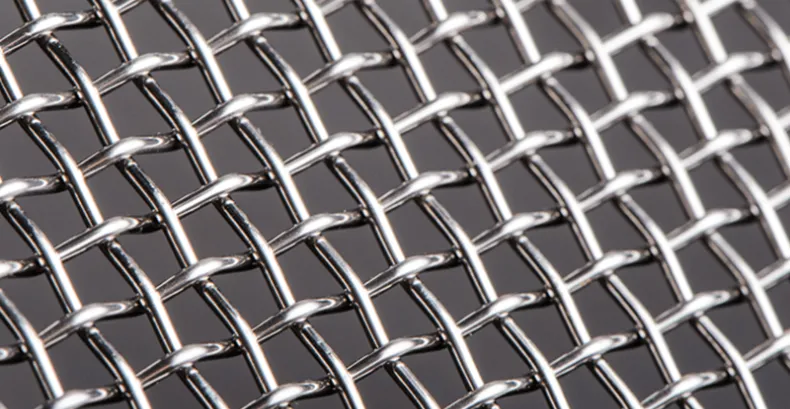
Plain weave is the most commonly used construction. Each wire passes alternately over and under the next warp wire. This provides even stress distribution and high dimensional stability.
A stainless steel mesh screen of this type is used for filtering liquids, sieving bulk materials, and protecting machinery. Plain weave combines good flow with mechanical strength. When greater rigidity is required, crimped meshes may be considered. They are used, among other applications, in heavy industrial screening.
Dutch, twill, and multilayer weaves in advanced pressure filtration
Complex filtration processes require more advanced structures. Dutch weave creates fine apertures and offers high mechanical strength.
This stainless mesh filters hydraulic oils, technical gases, and chemical media under high pressure. Multilayer filter laminates are also used for specific tasks. Their precision is expressed in microns (µm). In some processes, brass mesh can be an alternative. It is used in filtration where limiting spark generation is important.
Food-grade stainless mesh – hygiene and safety on the production line
Food-grade stainless steel mesh screens are often made from AISI 304 or 316L. This stainless steel limits bacterial growth and allows equipment to be easily cleaned using CIP systems. The material is also resistant to disinfectants and organic acids found in food products.
PZH certificates, FDA standards, and material approval for food contact
Food-grade stainless steel welded wire mesh requires quality documentation. PZH certificates, material declarations of conformity, and compliance with FDA requirements are important.
For this reason, food-grade flexible stainless mesh is safe to use. It is applied in beverage production, the dairy industry, meat processing, and packaging lines.

Applications of wire mesh stainless steel across key industries
The applications of technical stainless mesh continue to expand. It serves both heavy industry and contemporary architecture.
Process filtration, ventilation systems, and separation in the chemical industry
Flexible stainless steel welded wire mesh separates solid particles in the chemical and petrochemical industries. It protects installations and stabilizes flow. Acid-resistant steel withstands aggressive chemicals and operates for a long time, even in demanding conditions. Stainless wire meshes are also used in ventilation filters, industrial silencers, and dust removal systems.
Technical fine stainless steel mesh in automotive, defense, and machinery industries
In the automotive industry, stainless mesh screens are used as fuel filters, technical guards, and parts of exhaust systems. Heat resistance and long service life are important in these applications. In the machinery industry, stainless wire mesh protects and separates materials. They support screening processes and protect equipment components.
Architecture and design – decorative stainless steel mesh sheet as a modern element for facades and interiors
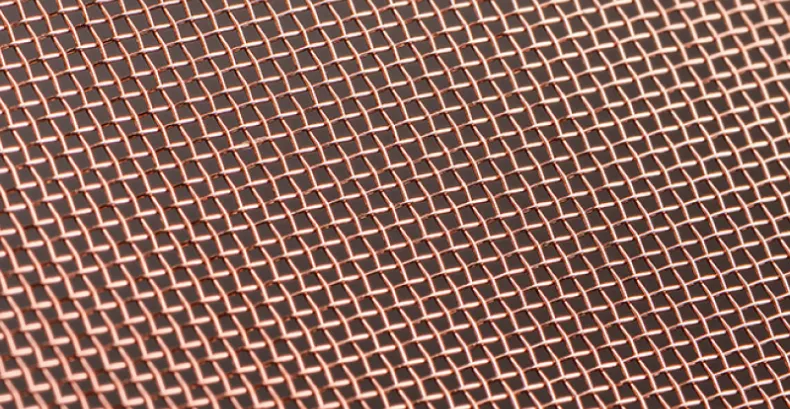
Decorative fine stainless steel mesh is used in facades, railings, and decorative ceilings. This material offers high durability and a modern appearance. It is also resistant to weather conditions. Other solutions are also used in decorative projects, such as copper mesh, which is applied in premium interior arrangements.
How to precisely select technical parameters: mesh size, aperture, and wire diameter?
The key technical parameters of wire mesh stainless steel are:
-
aperture size,
-
wire diameter,
-
opening,
-
size of stainless screen mesh,
-
weave type,
-
steel grade.
For precision filtration, stainless wire mesh with apertures from 0.02 mm and wires as thin as 0.025 mm is used. In heavy factory conditions, meshes with apertures up to 25 mm and wire diameters of 3–5 mm are applied.
Table of popular configurations: from fine stainless steel mesh (0.04 mm) to heavy industrial screens (25 mm)
|
Type of stainless steel screen mesh |
Aperture size |
Wire diameter |
Typical application |
|---|---|---|---|
|
Filter micromesh |
0.04 mm |
0.03 mm |
Precision filtration |
|
Process mesh |
0.2–1 mm |
0.1–0.4 mm |
Filtration of liquids and gases |
|
Industrial mesh |
2–10 mm |
0.8–2 mm |
Technical guards |
|
Heavy-duty technical screen |
10–25 mm |
2–5 mm |
Material screening |
Economic comparison: stainless steel wire mesh vs. galvanized mesh
Fine stainless steel mesh costs more at the initial purchase stage than galvanized mesh. However, over time, it delivers greater benefits.
Stainless woven wire mesh does not require additional rust protection and lasts longer. This reduces downtime costs. Galvanized meshes break down fast in wet areas or near harsh chemicals.
What influences the price of a stainless steel mesh roll and how to optimize your purchasing budget?
The steel type, wire size, weave pattern, and manufacturing precision all set the final price of a stainless steel mesh sheet. Smaller apertures and closer measurements make the production process more complex.
The delivery method also affects the price of wire mesh stainless steel. Buying directly from the manufacturer cuts out costs from middlemen. This also allows custom sheet sizes for particular requirements. Wire-Mesh also offers laser-cut elements and technical support in selecting filter parameters.
Why order directly from Wire-Mesh, the leading manufacturer of stainless steel mesh?
Direct cooperation with a stainless woven wire mesh manufacturer means better quality control. It shortens order lead times and allows technical characteristics to be adapted to specific requirements.
Wire-Mesh manufactures stainless steel mesh sheet in accordance with ISO 9044. The company provides complete material documentation. Customers in Mazovia benefit from fast delivery, with meshes available in just 24–48 hours.
The company also produces non-standard formats and offers technical support for purchasing departments and designers.
FAQ – Frequently Asked Questions about stainless steel wire mesh
This addresses common questions about wire mesh stainless steel. It covers their features, durability, and uses.
This steel does not rust in normal weather. Stainless screen mesh from AISI 316L is better for areas with much salt or regular contact with harsh chemicals.
Yes, but the process requires the correct choice of welding method and compatible materials. Contact corrosion can occur when stainless steel is joined with less resistant metals. Therefore, the wire mesh stainless steel should be combined only with compatible materials.
A product purchased through professional stainless woven wire mesh sales comes with material documentation and has a surface without a zinc coating. In addition, stainless steel is more chemically resistant and maintains stable parameters over time.
In industrial applications, compliance with ISO 9044 and material certificates are important. For the food industry, PZH certificates and FDA conformity documents are required.
If you need stainless steel screen mesh, work with a manufacturer specialized in its sales. Such a supplier knows the material well and delivers it throughout the EU. The manufacturer uses advanced technology and quality control, and also configures technical parameters to order.


