





Woven brass mesh – properties, technical parameters, and industrial applications
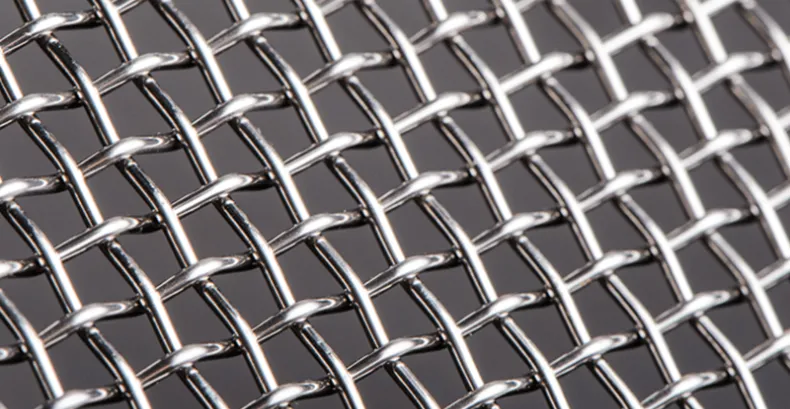
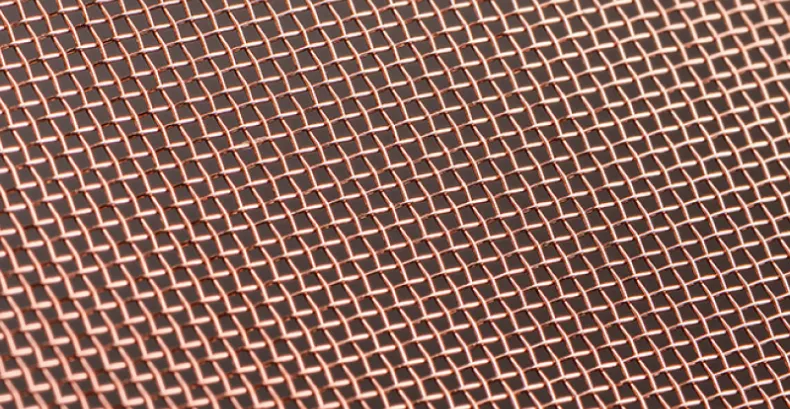
Brass wire mesh is a precision metal fabric. We manufacture it from brass wire, most often with the composition CuZn37(M63). We produce technical brass meshes. Industry uses them for filtration, separation, as well as for structural and decorative applications. The main quality parameter is woven brass mesh repeatability (ISO 9044). This has a direct impact on the technological process.
Why is brass wire mesh the optimal choice? Characteristics of the CuZn37 alloy
Brass wire mesh contains an alloy of copper and zinc. Zinc adds hardness to the alloy but lowers its heat and electrical flow. Brass mesh sheets come in three types of brass:
- C270 yellow brass - 65% copper and 35% zinc;
- C260 cartridge brass - 70% copper and 30% zinc;
- C240 brass consists of 80% copper and 20% zinc.
Brass wire mesh has high chemical resistance to seawater, industrial oils, and many organic solvents. It has a patina, which is a layer on the surface of the metal. The patina does not affect its utility, and architects use it in construction.
Chemical composition and corrosion resistance of brass
- Non-aggressive media in contact with brass wire mesh at ambient temperature: dry water vapors, fresh and sea water, dry carbon tetrachloride, acetic acid (stationary), and organic compounds in fluoridation processes.
- Brass corrodes quickly when exposed to several substances. These include mine waters, ammonia, sulfuric acid, hydrochloric acid, phosphoric acid, fatty acids, hydrogen sulfide, and very alkaline water solutions.
Brass corrodes faster with higher temperatures and humidity. For technical and filtration work, brass wire mesh bends more easily than stainless steel. Workers can form it easily and fit it to unusual shapes.
Electrical and thermal conductivity in technical solutions
Although the conductivity of brass mesh sheets is lower than copper, it remains sufficient for many technical applications, such as:
- EMI/RFI shielding screens;
- grounding elements;
- components in electrical devices.
Non-sparking properties – safety in hazardous zones
Brass mesh sheets are a non-sparking (anti-spark) material, therefore it can be used in explosion hazard zones (Ex). It is also antistatic, which reduces the risk of electrostatic charge accumulation.
Technical parameters: How to choose the right brass woven mesh?
Selecting the appropriate woven brass mesh requires the analysis of several key technical parameters.
Mesh size and wire diameter – precision measured in microns
Fine brass mesh filters very precisely. Its openings are only microns wide. This mesh separates dust and small particles effectively. It helps in laboratory and industrial tasks needing exact filtration.
Weave types: plain weave vs. Dutch weaves
Most commonly used:
|
Type of weave |
Technical characteristics |
Utility advantages |
Typical applications |
|---|---|---|---|
|
Plain weave woven brass mesh |
The simplest and most uniform weave, in which warp and weft wires alternate 1:1, creating regular, square meshes |
High dimensional stability, even stress distribution, good mechanical strength under medium loads. |
General filtration of liquids and gases, technical sieves, ventilation guards, decorative applications, architectural elements |
|
Dutch weave |
Weave from woven brass mesh of different thicknesses, with a densified structure, suitable for use in very narrow, tight filtration channels |
Very high filtration accuracy, greater pressure resistance, low permeability of solid particles. |
Precision industrial filtration, particle separation in chemistry and petrochemistry, high-pressure systems, filtration of fuels, oils, and gases |
Open area and its impact on filtration efficiency
The relative open area directly translates into the efficiency of the filtration process. It determines the throughput of the medium, occurring pressure drops, and the overall effectiveness of particle filtration. The higher the open area, the higher the throughput, but at the same time, the lower the filtration accuracy. Lower filtration accuracy and its higher efficiency (pressure drops and throughput) result from a lower [open area], but in practice, it is always a compromise between efficiency and the accuracy of the process.
Compared to bronze mesh, brass mesh screen provides a more favorable compromise between structural stability and ease of mesh forming.
Areas of application: From industrial filtration to architecture
Brass mesh screens find application in many industries.
Fine brass mesh screen in the filtration of oils and fuels
Thin brass mesh filters hydraulic oils, fuels, emulsions, and other liquids. Such liquids need proper separation of mechanical impurities. Its fine weave holds solid particles, sediments, and filings. This keeps parts of processing and filtering systems from wearing out.
Brass wire cloth resists corrosion. It is mechanically sturdy and allows many cleanings. So, it serves in industrial filters, separators, and flow installations.
Brass mesh screen for EMI/RFI shielding
Brass wire screen significantly offers protection against EMI/RFI interference due to its ability to conduct current. Woven brass mesh is woven in a way that minimizes infiltration by electromagnetic waves, while simultaneously improving airflow. Consequently, brass is used as an enclosure for electrical devices and systems that require signal stability/noise reduction.
Decorative brass wire mesh in interior design and restoration
In architecture:
- facades and decorative panels,
- renovations of historical buildings,
- furniture elements.
Natural patina gives the material a noble appearance. Compared to crimped mesh, brass wire cloth offers better plasticity while maintaining a very good balance between strength and ease of forming.
Specialized uses: Beekeeping and precision modeling
Laboratories and the chemical industry use fine brass mesh screens. They help with granulation classification, sieve analysis, and precise separation.
Beekeepers also use the brass mesh screens as queen excluders. Model makers use them for structural parts. Both applications need strength, accuracy, and careful control of the openings.
Material comparison: brass mesh sheets vs. copper and stainless steel
|
Parameter |
Brass mesh panels (CuZn37) |
Copper |
Stainless steel |
|---|---|---|---|
|
Corrosion resistance |
High |
Medium |
Very high |
|
Plasticity |
Very good |
Very high |
Limited |
|
Conductivity |
Good |
Very high |
Low |
|
Mechanical resistance |
High |
Low |
Very high |
|
Price |
Medium |
High |
Medium/High |
When to choose brass over pure copper?
brass mesh panels are a better choice when the following are needed:
- greater mechanical resistance,
- dimensional stability,
- lower cost while maintaining conductivity.
In comparison to crimped, brass woven meshes offer better plasticity and non-sparking properties. In turn, compared to bronze mesh, it provides a more favorable price-to-parameter ratio.
Maintenance and cleaning – how to ensure durability?
Maintenance procedures and washing of CuZn37 type brass woven meshes should be carried out using mild chemical agents so as not to penetrate deep into it, thereby not disturbing the structure of the material, and thus destroying its internal structure. Certainly, one should beware of strong acid baths, as brass mesh cloth is destroyed on the surface (loses) its mechanical features this way. Regular, proper care guarantees them technological and aesthetic durability for a long time.

Brass meshes from Wire-Mesh.pl – quality and personalization
As a manufacturer, we offer:
- a wide range of meshes (from micron to decorative),
- sale in rolls, sheets, and by the linear meter (mb),
- cutting to size,
- 3.1 certificate for the material.
Our brass mesh cloth meets the requirements of PN-EN and ISO 9044 standards, which guarantees repeatability of parameters.
Wide range and brass mesh panels cut to size
We offer a wide assortment of brass meshes, including the possibility of precise cutting of sheets to size according to project requirements. Unlike typical offers, the flexible brass mesh shop [provides] delivery both in terms of sheets and short production batches. The material fits technical and structural needs. We ship quickly within the European Union. This speeds up production. Other shops with decorative brass wire mesh often deliver goods longer.
Frequently Asked Questions about brass wire cloth (FAQ)
Yes, it covers with patina. This is a natural process and does not affect the filtration or mechanical properties.


