






How professional grain cleaning screen solutions optimize agricultural processing
An unstable aperture size can shift the separation cut point and increase the proportion of incorrectly sized grain in the final batch. The scale of the resulting loss depends on the crop, machine settings, feed moisture and the configuration of the complete cleaning system, so it cannot be expressed as one universal percentage. A grain cleaning screen should be selected according to the aperture size and shape, wire diameter, open area and mounting method.
Screen separators used in winnowers and combined air-screen cleaners subject the screening surface to repeated dynamic loads. This does not mean that every screen loses its geometry after several weeks. Wear rate depends on tension, support, throughput, contaminant content and wire properties.
A metal mesh manufacturer should know the machine model, direction of product movement and required separation cut point. In gravity separators, the result is determined primarily by material density, airflow and deck movement rather than by the screen alone.
Farms, grain elevators and seed processing plants using screens manufactured for a specific machine can reduce installation errors and unplanned downtime. A correctly fitted seed cleaning wire mesh also reduces the risk of uneven tension and material leakage around the frame. A return on investment during the first season should not be promised without data on line capacity, downtime costs and the previous frequency of screen replacement.
Advanced seed sizing and grading mesh for premium crop separation
The required aperture tolerance depends on seed dimensions, the intended division into fractions and the design of the grader. There is no universal requirement for hundredths-of-a-millimetre accuracy across all crop types. A seed sizing and grading mesh should have a controlled aperture size and a consistent wire diameter because local deviations affect both the open area and separation efficiency.
Seed classification on screens is based mainly on size and shape. Thousand-seed weight describes the overall properties of a batch but does not replace dimensional control. A gravity separator, in turn, separates material primarily according to specific density.
Square apertures work well for seeds with similar dimensions along two axes. With elongated grain, orientation during movement still affects whether the material passes through the opening. Rectangular, slotted and other aperture profiles are therefore also used.
Separate cleaning stages remove coarse and fine contaminants. Light husks are usually separated by an air stream, while stones, damaged kernels and materials of different density may require additional equipment. A grain mesh should therefore be selected as one component of the complete processing line, not as an isolated element.
Specialized fine mesh for grain separation for rapeseed and mustard seeds
Rapeseed and mustard require small, accurately manufactured apertures. However, the opening range and wire diameter must be selected according to the variety, moisture level, contamination profile and machine capacity. Fixed values of 1.0–2.2 mm and a maximum wire diameter of 0.4 mm are not suitable for every processing line.
With the aperture size held constant, thicker wire reduces the open area and may restrict throughput. Thinner wire increases the available screening area but can be more susceptible to deformation and wear. This is the central engineering trade-off when selecting a fine mesh for grain separation.
Small seeds may develop an electrostatic charge under dry conditions. In practice, moisture, dust, plant residues and incorrect deck loading are often more significant causes of restricted material flow. A second screen may be required to remove oversize material separately from the finest fraction.
High durability wheat cleaning wire cloth for wheat and cereal crops
A wheat cleaning wire cloth should separate material consistently by size during continuous operation. Changes in grain moisture mainly affect feed flow, the tendency of apertures to become blocked and overall machine capacity. They do not directly alter the geometry of a correctly manufactured steel mesh.
Weave type, tension and open area must be matched to the machine and expected throughput. Incorrect support or uneven tension can cause local movement, accelerated wire fatigue and inconsistent separation.
Cereal cleaning is not completed by one screen. Broken, sprouted or insect-damaged kernels, as well as contaminants of a similar size, may require aspiration, an indented cylinder, a gravity table or an optical sorter. The wheat cleaning wire cloth influences the dimensional uniformity of the batch, but its final commercial grade also depends on moisture, bulk density, contaminant content and other quality parameters.
Comparing woven wire mesh for grain cleaners and perforated metal sheets for grain cleaning
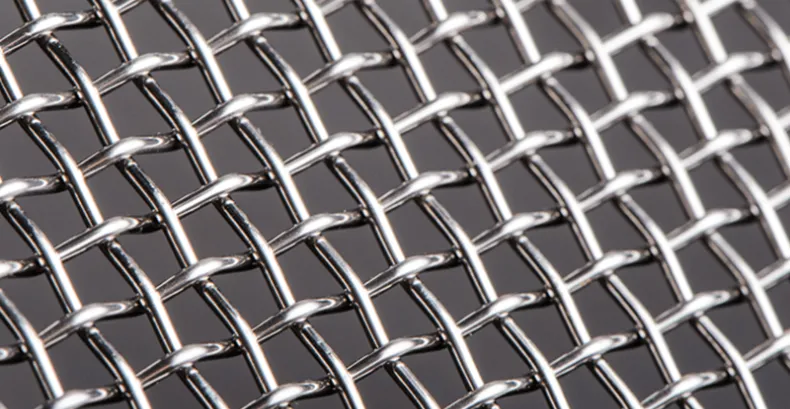
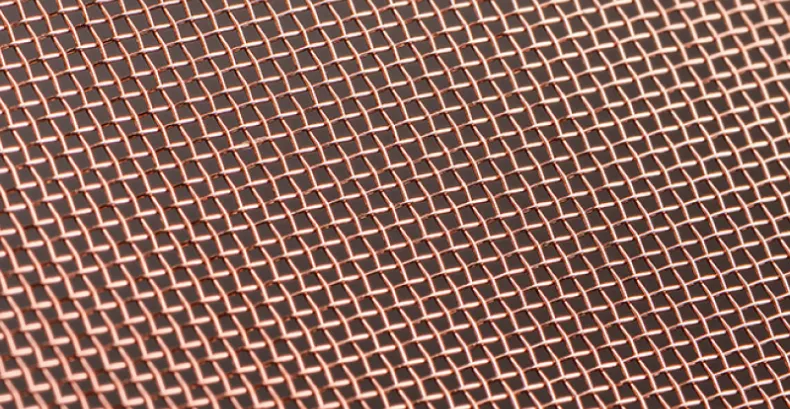
A woven wire mesh for grain cleaners usually provides a large open area and a degree of elastic surface response.
Rigid aperture geometry and good resistance to localised loads are important characteristics in grain-cleaning applications. Neither solution is automatically more durable in every application. Performance depends on material thickness, aperture shape, quality of support, contaminant type and machine operating conditions. The selection must also consider cleaning requirements, screen replacement time, the permissible level of product carryover, and the suitability of perforated metal sheets for the specific process.
|
Parameter |
Woven wire mesh |
Perforated sheet |
|---|---|---|
|
Open area |
Usually high; determined by aperture and wire diameter |
Determined by pitch, aperture shape and sheet thickness |
|
Rigidity |
Lower; requires correct tension and support |
Usually higher |
|
Risk of aperture blockage |
Depends on seed shape, moisture and weave |
Depends on aperture profile, moisture and sheet thickness |
|
Typical application |
Precise separation of seeds and cereals |
Pre-cleaning, higher local loads and specific aperture profiles |
Welded metal screens are generally used where larger apertures and high rigidity are required. They are not automatically an intermediate or lower-cost alternative to precision woven mesh. Cost depends on material, dimensions, manufacturing technology and the number of fabricated components.
Perforated screens for seed sorters can be manufactured with round, slotted or specially profiled openings. Their suitability depends on the shape and orientation of the processed seeds, not simply on nominal aperture size.

Selecting heavy duty galvanized wire mesh for seed cleaning under high moisture conditions
Moisture, condensation and insufficient ventilation accelerate the corrosion of carbon steel. A galvanized wire mesh for seed cleaning uses the protective action of zinc to delay the formation of red rust on the steel substrate. Its service life depends on coating thickness, mechanical damage, contamination and the duration of wet exposure.
Galvanized wire requires correct storage. Prolonged moisture trapped between tightly stacked elements can create zinc corrosion products and cause local coating deterioration. Galvanizing reduces corrosion but does not eliminate it in crevices or mechanically damaged areas.
Uncoated carbon steel may remain a justified choice in dry, moderately loaded installations where inspection and scheduled replacement are included in the maintenance plan. AISI 304 or AISI 316 stainless steel is selected when higher corrosion resistance, easier cleaning or a defined hygiene standard is required.
High throughput soil conditioning utilizing a premium compost sifting mesh
Moist compost may contain salts, chlorides and organic decomposition products. Its pH and corrosiveness change according to composition and maturity. It should not be assumed that every compost is more aggressive than atmospheric exposure or that one steel grade will provide a predetermined service life.
A compost sifting mesh made from carbon steel is susceptible to corrosion, particularly when it remains wet after operation. AISI 316 may provide better resistance than AISI 304 in many chloride-containing environments, but selection requires assessment of the material chemistry, temperature, cleaning process and areas where moisture can accumulate.
Agricultural screens used in compost installations must also withstand stones, branches and woody fractions. Corrosion resistance alone is therefore insufficient. The wire diameter, aperture size, support and method of mounting must also be matched to the mechanical load.
Engineering a durable compost sifting mesh resistant to organic wear
A double-crimped compost sifting mesh can restrict wire movement at crossing points and stabilise larger apertures. It does not, however, guarantee freedom from deformation under overload or inadequate support.
Screening separates oversize material such as larger pieces of wood and incompletely decomposed residues. It is not a direct method of determining compost maturity, which must be assessed using additional process and product parameters.
The aperture must correspond to the required substrate structure. An opening that is too small reduces throughput and increases the risk of blinding. An opening that is too large allows unwanted oversize material into the finished product.
Flexible humus sifting wire screen options for advanced soil preparation
A humus sifting wire screen is often installed in rotary trommels, although it can also operate in other screening systems. Inside the drum, the material is lifted and dropped, subjecting the surface to abrasion, impact and repeated loading at the mounting points.
The screen element should be formed to the drum radius, properly joined and adequately supported. Maximum flexibility is not the objective. The forming process must not damage the wires or their crossing points, while the completed surface must remain stable during rotation.
In land reclamation lines, a separate sand screen may prepare the mineral fraction before it is combined with organic material. Effective soil conditioning requires control of both particle-size distribution and the composition of the final mixture.
Selecting the ideal technical specifications for agricultural screens from Wire-Mesh
Selection begins with the feed material and machine configuration. Before production documentation is prepared, the following information should be provided:
- crop type, seed shape and required particle-size range;
- seasonal moisture and the proportion of dust, husks, stones and other contaminants;
- machine model, screen dimensions, mounting system and support arrangement;
- required throughput and number of cleaning stages;
- aperture shape, nominal opening size, wire diameter and permissible deviations;
- required material: uncoated carbon steel, galvanized wire or AISI 304/316 stainless steel.
Thousand-seed weight provides useful information about a batch, but seed dimensions and shape have a more direct influence on screen selection. A seed grader replacement screen should therefore be selected using trials or reliable process data, particularly for small seeds and narrow fraction cuts.
The product range may include screens for winnowers, cereal cleaning equipment, wheat processing, compost classification and humus preparation. Each surface should be matched to the operating conditions rather than selected solely from a standard aperture table.
Manufacturing a screen according to verified machine dimensions reduces the risk of excessive clearance, incorrect tension and contact with frame components, provided that measurement and installation are completed correctly. Request a quotation for a screen adapted to your machine and include its model, screening surface dimensions and mounting system.


